⚡
Blocked drain? Same-day response, often within the hour. Call 07351 300824
High-pressure jetting that clears the blockage and proves it’s gone. Domestic and commercial drain jetting across King’s Lynn and West Norfolk, most jobs done within the hour. Family-run and owner-operated since 2016. When you ring, you speak directly to Alex, the person doing the work.
10+
24/7
No Hidden Fees
★ 5.0 on Google
80+ Reviews
High-pressure water jetting in King’s Lynn from AM Waste Management. We clear the blockage at 4,000 psi, dye test the run to prove it, then camera the pipe for hidden defects on the same visit. Domestic callouts start from £100 plus VAT and commercial from £125 plus VAT, 24/7 with no out-of-hours premium. Environment Agency registered waste carrier.
Blocked drains, toilets and gullies cleared with high-pressure water jetting, using root-cutting and degreasing nozzles for root ingress, fatbergs and heavy limescale.
Dye test and camera check on the same visit, so a CCTV drain survey confirms the run is clear and shows up cracked pipes, displaced joints or root ingress.
Fixed callout pricing: domestic from £100 plus VAT, commercial from £125 plus VAT, both including up to an hour on site.
King’s Lynn and West Norfolk, from Tuesday Market Place and the Gaywood estates out along the A10 and A47 to Downham Market, Wisbech and Hunstanton. Part of our 24/7 emergency drainage cover in King’s Lynn. Rated 5.0 on Google from 80+ reviews.
A blocked drain often gives you fair warning before it stops completely. The trick is knowing what to look for.
Slow drainage is the obvious sign. Your kitchen sink might take 30 seconds to empty instead of five. The shower tray could hold a couple of inches of water around your ankles. That’s not normal wear and tear. It’s a partial blockage building up inside the pipe. Grease, soap residue, food waste and hair can all cling to the pipe walls. This narrows the pipe bore over time. Left alone, it’ll close off entirely.
Gurgling sounds from a plughole or toilet are another clear signal. That noise means air is trapped in the system. Water cannot flow freely past an obstruction. You might hear it when you flush upstairs and a drain gurgles downstairs. Or when the washing machine empties and the kitchen sink bubbles. Both point to the same problem. Something is sitting in the shared pipework, restricting flow.
Bad smells around drains, gullies or manholes tell you waste is sitting where it should not be. Standing waste in a partly blocked pipe turns foul quickly, especially in warm weather.
Outside, look for visible signs around manhole covers and gully grates without lifting or opening them. Standing water in a gully, or water seeping from the edges of a manhole cover, usually points to a blockage further downstream, in the external drains, gullies and manholes that carry waste away from the property.
Tree roots are a common cause in older properties. Where a joint has deteriorated, roots find their way into the pipe and grow inside it. They catch debris, the flow slows, and the drain can block completely after heavy rain.
Acting early saves you money. A partial blockage cleared with high-pressure water jetting is usually sorted within the hour on site. Leave it long enough and it stops being a slow drain and becomes an emergency drain unblocking callout instead. More serious blockages that have caused sewage spillage can take longer to deal with, and cost more to put right. If that happens, we always clean up and disinfect every area affected.
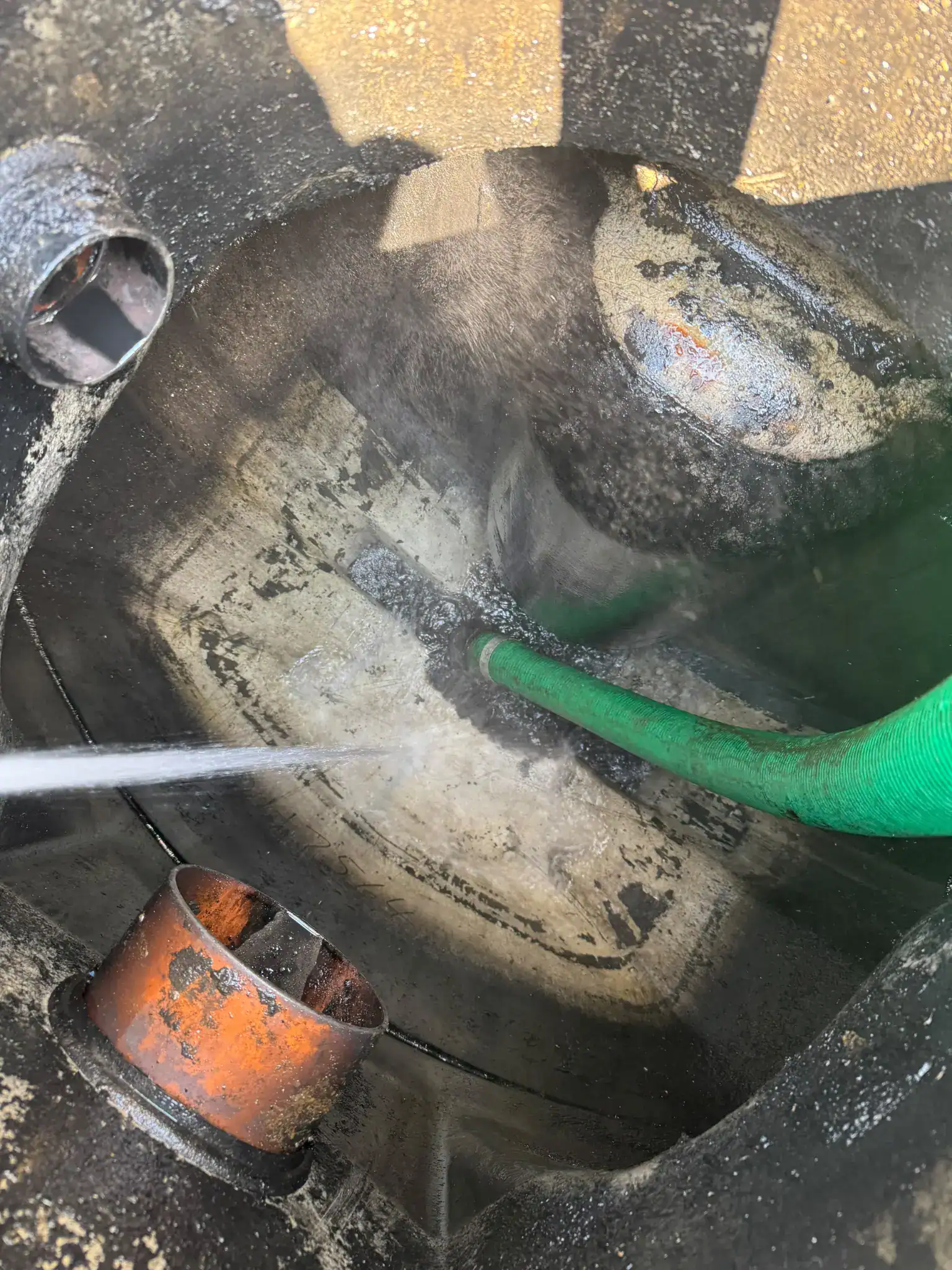
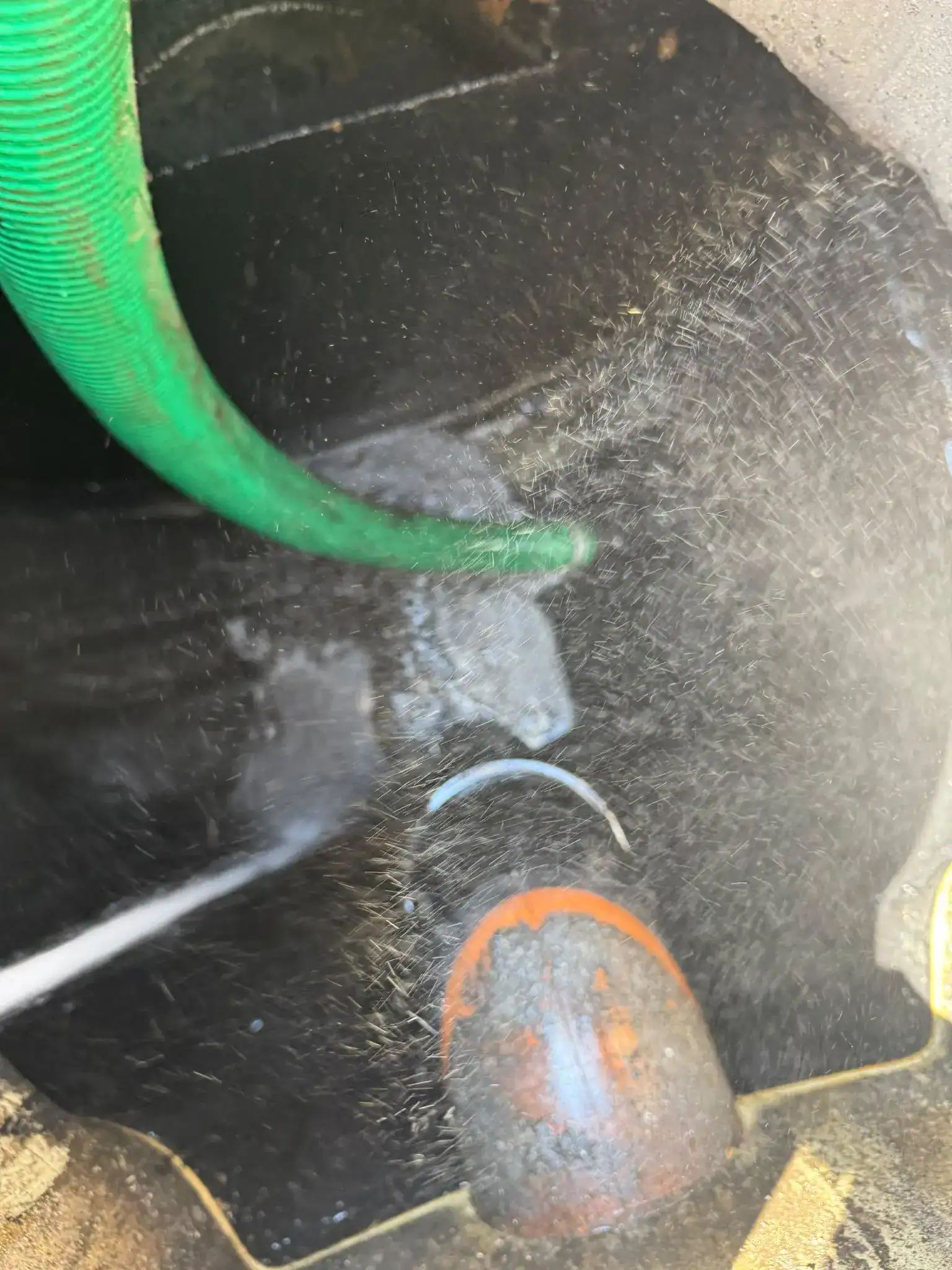
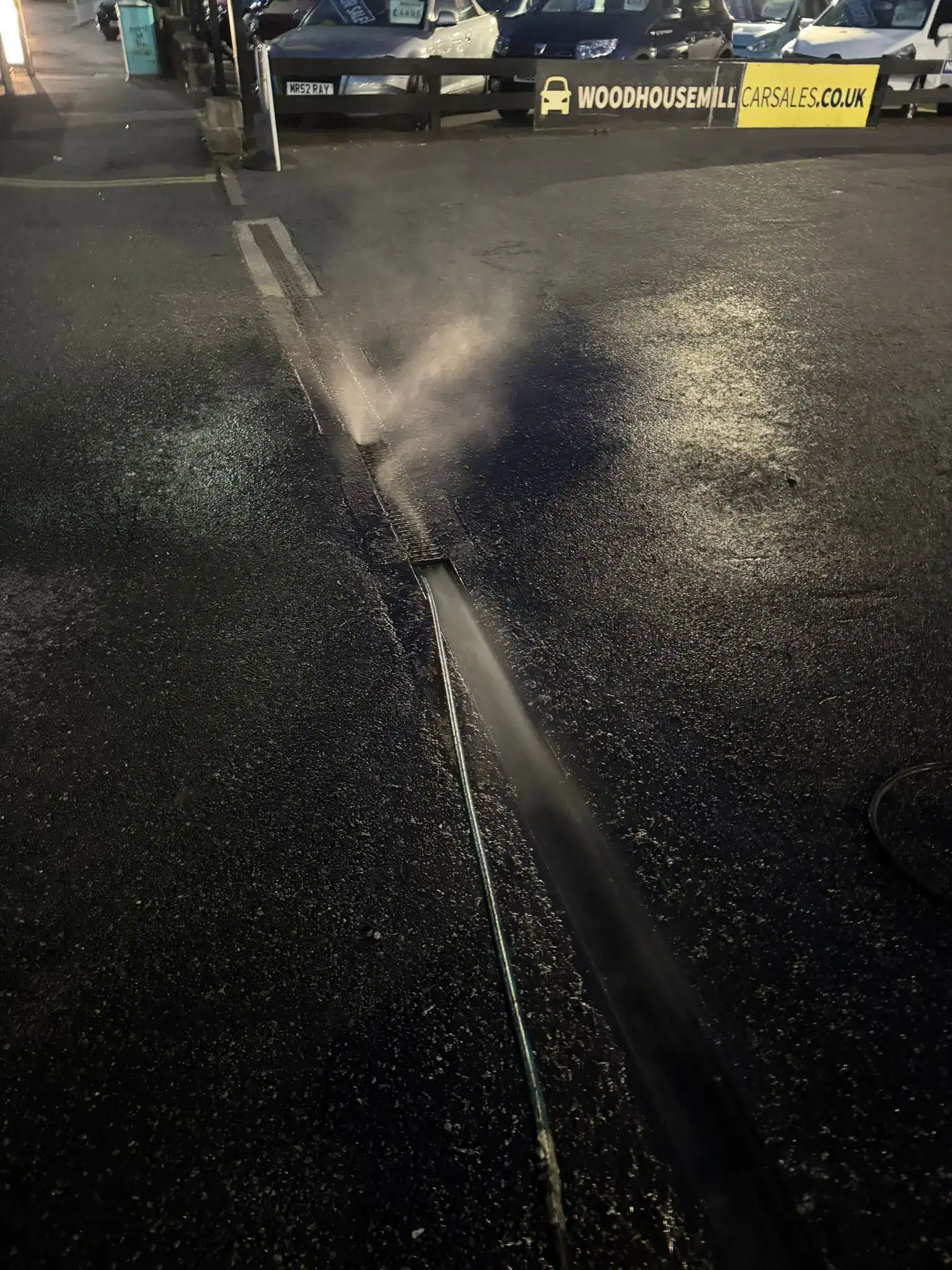
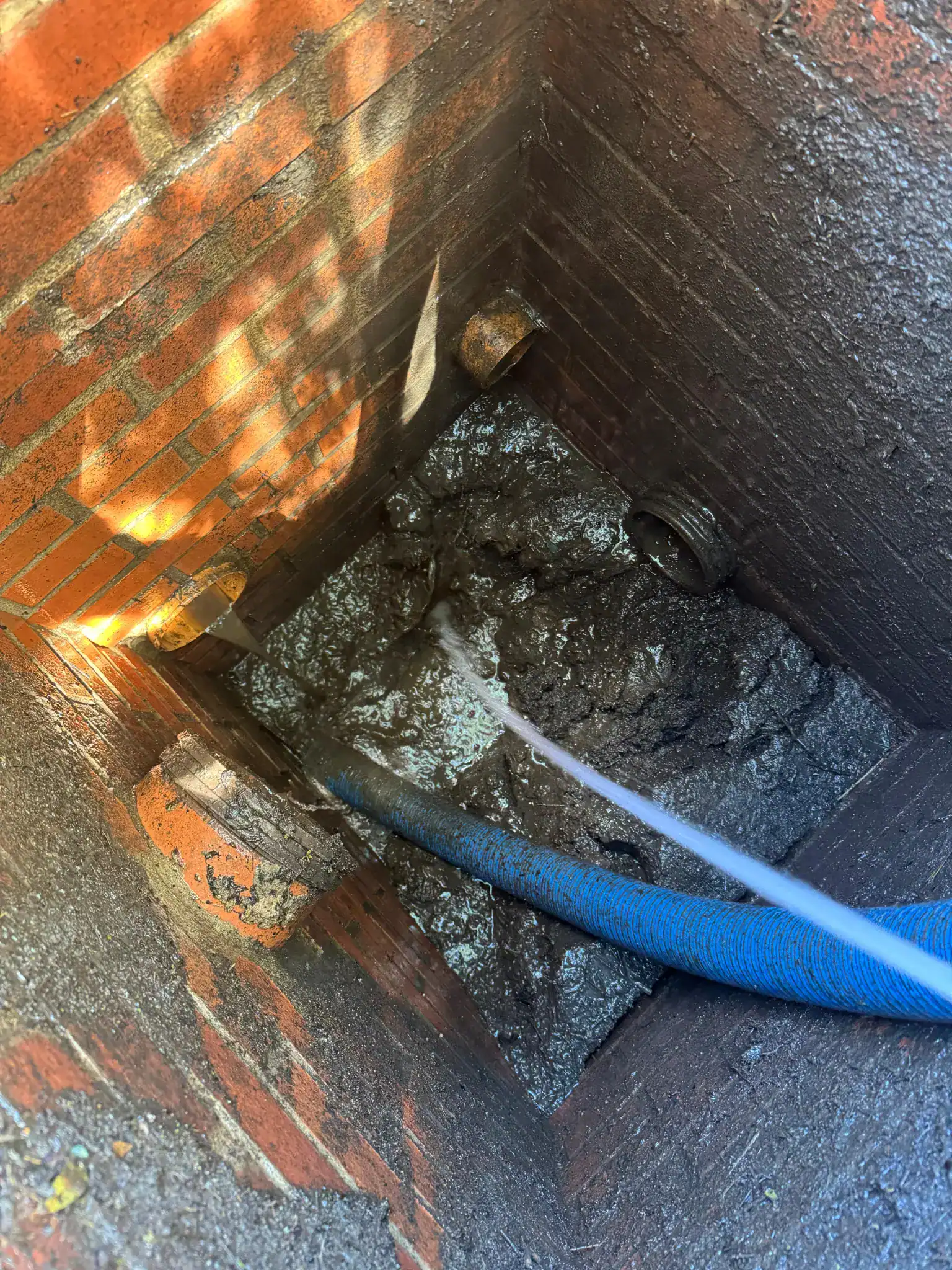
A jetting hose is fed into the drain with a nozzle suited to the blockage. Water is released through the nozzle at 4,000 psi. Jetting in drains and sewers has its own industry code of practice, and the Health and Safety Executive recognises it as the standard for this sort of work. It covers nozzle choice, hose handling and operator training, which is why matching the nozzle to the pipe matters as much as the pressure does. Some jets face backwards to drive the hose along and scour the pipe, while others face forwards to break up the blockage. The pressure cuts through hardened grease, breaks up root growth and strips deposits off the pipe walls. The loosened debris is then flushed through the system.
We feed a flexible hose with a specialist nozzle into the blocked pipe. The nozzle has rear-facing jets. The rear-facing jets help propel the hose along the pipe while the nozzle works to break up and clear the blockage.
Different nozzles do different jobs. A root-cutting nozzle rotates to cut through and clear roots that have got into the pipe. A degreasing nozzle concentrates the spray pattern and strips fat deposits off the pipe bore. We carry the nozzles needed for bad root ingress, fatbergs and heavy limescale build-up. Which one we use depends on the cause of the blockage and where it is.
Where access and visibility allow, we run the camera first to see what we are dealing with, then pick the method and the nozzle to suit. Once the blockage is clear we dye test the run to prove it. Then the camera goes back through to check for hidden defects, so you know whether anything is likely to bring you the same problem again. Every van carries jetting and CCTV kit, so all of that happens on one visit.
Jetting and rodding work in different ways. Rods can push a hole through a blockage and get the flow back. Jetting uses pressurised water to strip the deposits off the inside of the pipe and flush them through. Where grease has built up along the pipe walls, jetting gives a far more thorough clean than rodding on its own. Which one is right depends on the cause of the blockage, the condition of the pipe and the access.
Once the blockage has been cleared, we may run the camera through the drain again, where access and visibility allow. This helps us check whether the accessible section of the pipe has been cleared across its full bore and look for possible issues such as cracked pipes, displaced joints or root ingress.
We will show you the CCTV footage and explain what we have found. Where the picture points to something more than a blockage, a full CCTV drain survey of the run gives you the detail in writing. If anything needs further investigation or repair, we will also talk you through the recommended next step.
People ask whether they can hire a jetter or use the pressure washer in the garage. Honest answer, no, and not because we want the callout.
A patio washer runs at a fraction of the pressure, and the nozzle is built to spray a surface, not travel thirty metres down a pipe and scour it on the way. Drain nozzles vary depending on what’s in there. Rear-facing jets to pull the hose along, a rotating head for roots, a tighter pattern for fat. Get that wrong and you push the blockage further along instead of clearing it, which turns a two-metre problem into a twenty-metre one.
Then there’s the pipe. Old clay and pitch fibre won’t take pressure in the wrong place, and a joint that’s already gone will let the water out into the ground behind it.
Try a plunger on a slow sink by all means. Past that, it’s cheaper to have someone turn up with the right nozzle than to put right what went wrong.
Not every drain problem needs jetting, and we will tell you when a simpler fix will do.
If one kitchen sink has only recently started draining slowly, the problem may be close to the sink, with hair, soap, or food waste caught in the U-bend. A plunger can be worth trying first. If you are confident removing the trap safely, place a container underneath, clean it out, refit it carefully and check for leaks. If the sink clears and keeps draining normally, job done. If the problem returns, affects other drains or you are unsure what is causing it, it is worth getting the drainage checked.
A single toilet that will not flush properly, but every other drain in the house is fine? The blockage may be local to the toilet, in the pan, the trap or the pipework behind it, rather than further along the external drain. A plunger or a toilet auger from a hardware shop is worth trying if the bowl is not close to overflowing. Do not flush again if the water level is rising. Wait for it to drop. Sometimes it is a solid object, a child’s toy being the classic. Jetting would not be the first thing we reached for in that situation.
Where it gets more serious is structural damage. If a CCTV survey shows a cracked, displaced or collapsed pipe, jetting will move the loose debris but it will not put the pipe back together.
You can blast water through a collapsed drain all day and the pipe is still collapsed. Worse, the water escapes through the break and washes out the ground around the pipe, which makes the collapse bigger. A collapse needs digging up and the section replacing, so it is drain repair and excavation work rather than clearing. We will tell you straight if that is what we find.
Plenty of older properties around King’s Lynn still have the original clay drainage, and anything built in the fifties or sixties may have pitch fibre, which sags and deforms as it ages. Decades in the ground means cracks, displaced joints and collapsed sections. No amount of water pressure puts a broken pipe back together.
Tree root ingress is a different problem. Jetting will cut the roots out and get the flow back, but it does not repair the crack or the open joint that let them in. If they come back, the pipe needs fixing rather than clearing. We patch lining ourselves. For a full liner we bring in a specialist we trust, but you deal with us and you get one bill. You are not left chasing two firms.
The honest answer is this: if we turn up and jetting isn’t what you need, we’ll say so. No faffing about, no doing work that won’t fix the problem. Every van carries CCTV as well as high-pressure jetting equipment, so we can assess the problem and decide on the most sensible next step. You deal with a local, owner-operated team rather than a call centre, so there are no unnecessary layers between you and the people dealing with the problem.
Nobody wants a surprise on the bill. We confirm the callout charge on the phone before we set off, and if the job needs more than that, we tell you the cost before we do it.
Cost depends on the job. We charge a set callout for domestic and a set callout for commercial, and after that it comes down to how easy the drain is to get at, how long the run is, what condition the pipe is in and what is actually stuck in it. A blocked sink trap in a terrace is not the same job as thirty metres of greased-up commercial drain.
Domestic callouts start at £100 plus VAT. Commercial callouts start at £125 plus VAT. Both include up to an hour on site, which covers the jetting, the dye test and the camera. Tell us what you are seeing on the phone and we will give you a price. If we get there and it turns out to be more involved, we tell you what we have found and what it will cost before we touch anything.
The things that push the price up or down:
For commercial properties in King’s Lynn, especially restaurants and takeaways along the town centre, older drainage runs beneath Victorian and Georgian buildings. The pipework layout can add time. Tight yards, shared drainage, and decades of grease build-up all factor in. Larger sites, such as care homes or schools, may also take longer to assess and clear if the drainage covers a wider area.
Section 111 of the Water Industry Act 1991 makes it an offence to put anything into a public sewer that is likely to block it, and that includes fats and oils off a kitchen. So on a commercial site a greased-up drain is a compliance problem as well as a blockage.
Give us a call and describe what is happening. We will tell you what we can price from that, and what needs a look on site.
Common questions about High-Pressure Water Jetting in King’s Lynn.
We’re on call 24/7 across King’s Lynn. Most jobs we get to the same day, often within a few hours, depending on where we are and what’s on. When you call, we’ll tell you straight where you are in the diary and give you the clearest arrival time we can. Most blockages are cleared within one hour on site.
We look at the blockage and decide the safest way to clear it. High-pressure water jetting where it suits, with the camera used to see what we are dealing with. Once it is clear we dye test the run to prove it, then put the camera back through to check for defects. Most blockages are cleared within the hour. If we find damage, we tell you what it is.
Older properties around Gaywood and the town centre often have clay pipe drainage that’s been in the ground for decades. Over time, these can develop cracks, displaced joints or root intrusion. A CCTV drain survey can help identify the cause of repeated blockages and any visible pipe damage.
Rodding pushes a hole through a blockage but leaves the grease and debris on the pipe walls, so it builds straight back up. Jetting strips the pipe back to its original bore with water at 4,000 psi. That is why a rodded drain often blocks again. Jetting clears the deposits that caused it, so it is far less likely to come straight back. If a rodded drain keeps coming back, jetting is what you need.
Done properly, no. The nozzle is matched to the pipe and the blockage, and we look inside with the camera before we jet, so we are not firing 4,000 psi into something that is already broken. If the pipe is failing, the camera shows it and we tell you before we go any further. Jetting a pipe that is already cracked or collapsed can make things worse, which is exactly why we look first.
Call Alex direct and he will give you a price before anyone sets off.