⚡
Blocked drain? Same-day response, often within the hour. Call 07351 300824
Keep your commercial kitchen compliant and running smoothly with scheduled grease trap emptying and cleaning across King’s Lynn and West Norfolk. Family-run and owner-operated since 2016. When you ring, you speak directly to Alex, the person who does the work.
10+
24/7
No Hidden Fees
★ 5.0 on Google
80+ Reviews
AM Waste Management provides scheduled grease trap management for commercial kitchens across King’s Lynn and West Norfolk. We empty and clean grease traps to help prevent fat, oil and grease build-up, bad odours, blocked drains and compliance problems. Family-run and owner-operated since 2016, Alex answers the phone directly and arranges grease trap cleaning around the needs of your kitchen.
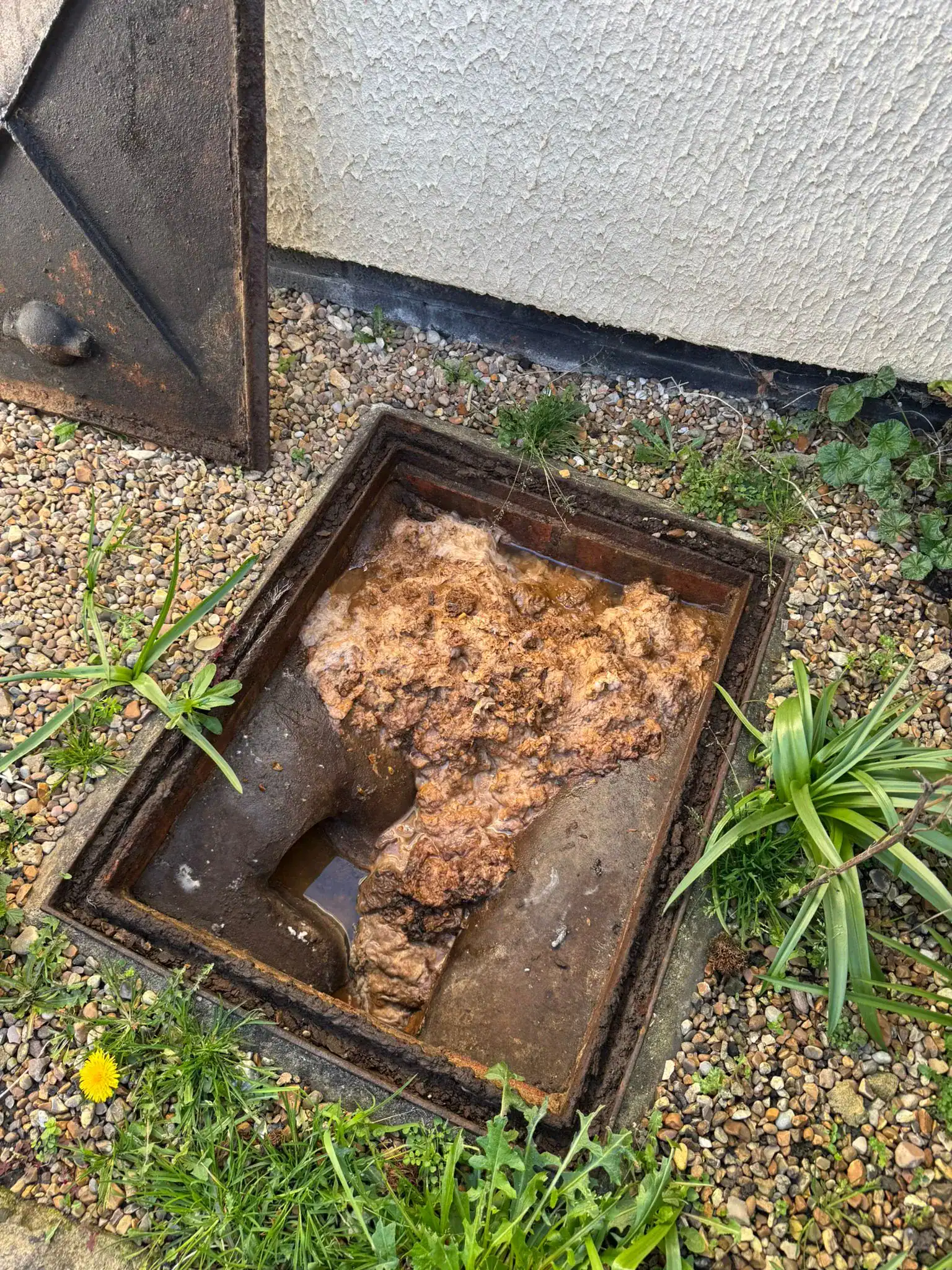
A grease trap sits between your kitchen drains and the main sewer line to catch fats, oils and grease before they get into the drainage system. It is a metal or plastic chamber that fills up with solidified fats, food waste and black liquid, all of which has to be removed regularly or the trap stops doing its job. Grease trap work is part of our commercial drainage service for kitchens across King’s Lynn and West Norfolk.
More than once, a café or takeaway owner in King’s Lynn has rung us with a sink backing up, a bad smell putting customers off, or an environmental health notice after an inspection. Nine times out of ten, the trap had not been emptied in months.
Here is what a grease trap maintenance and waste disposal job involves:
Point five matters. As a business you cannot tip grease trap waste down your kitchen sink, into your own private drainage, or into the public foul drains. The waste has to go to a licensed site with a waste transfer note (the paperwork that records it). We are a registered waste carrier with the Environment Agency (registration CBDU612107), so the waste leaves your site legally and you get the transfer note to prove it. Under Environment Agency rules, you are legally responsible for what happens to your waste, including where it ends up.
A standard grease trap service takes around 30 to 45 minutes. Larger traps in hotels and care homes can take longer. You do not have to close the kitchen. We work around your hours and come at whatever time suits.
This is not a one-off. The trap needs emptying on a regular schedule based on how much you cook and how busy you are. A fish and chip shop frying all day needs it far more often than a café serving light lunches. We work out the right interval with you so the trap is kept on top of and never becomes a problem.
Looking for a different drainage service? View all of our drainage services.
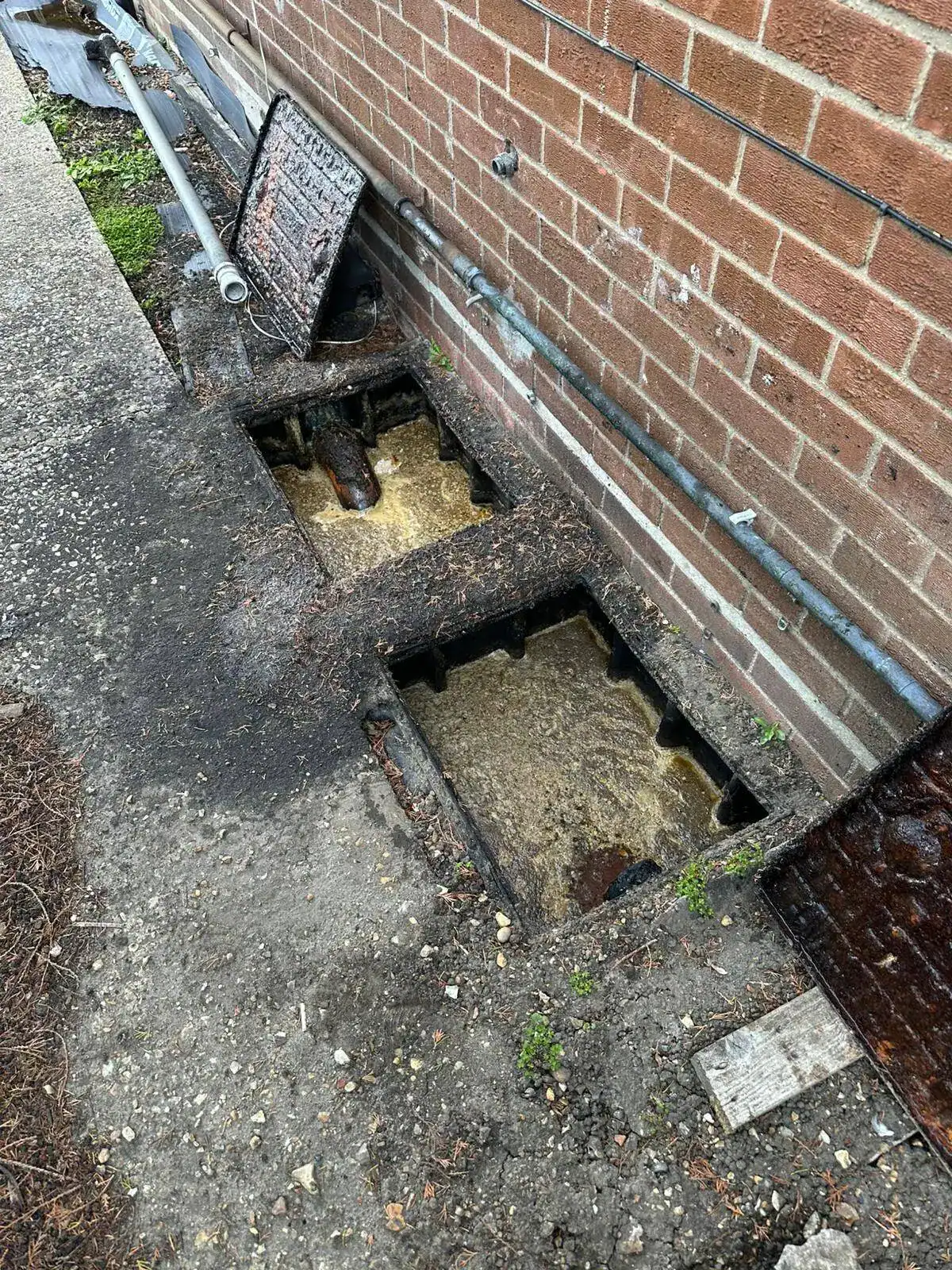
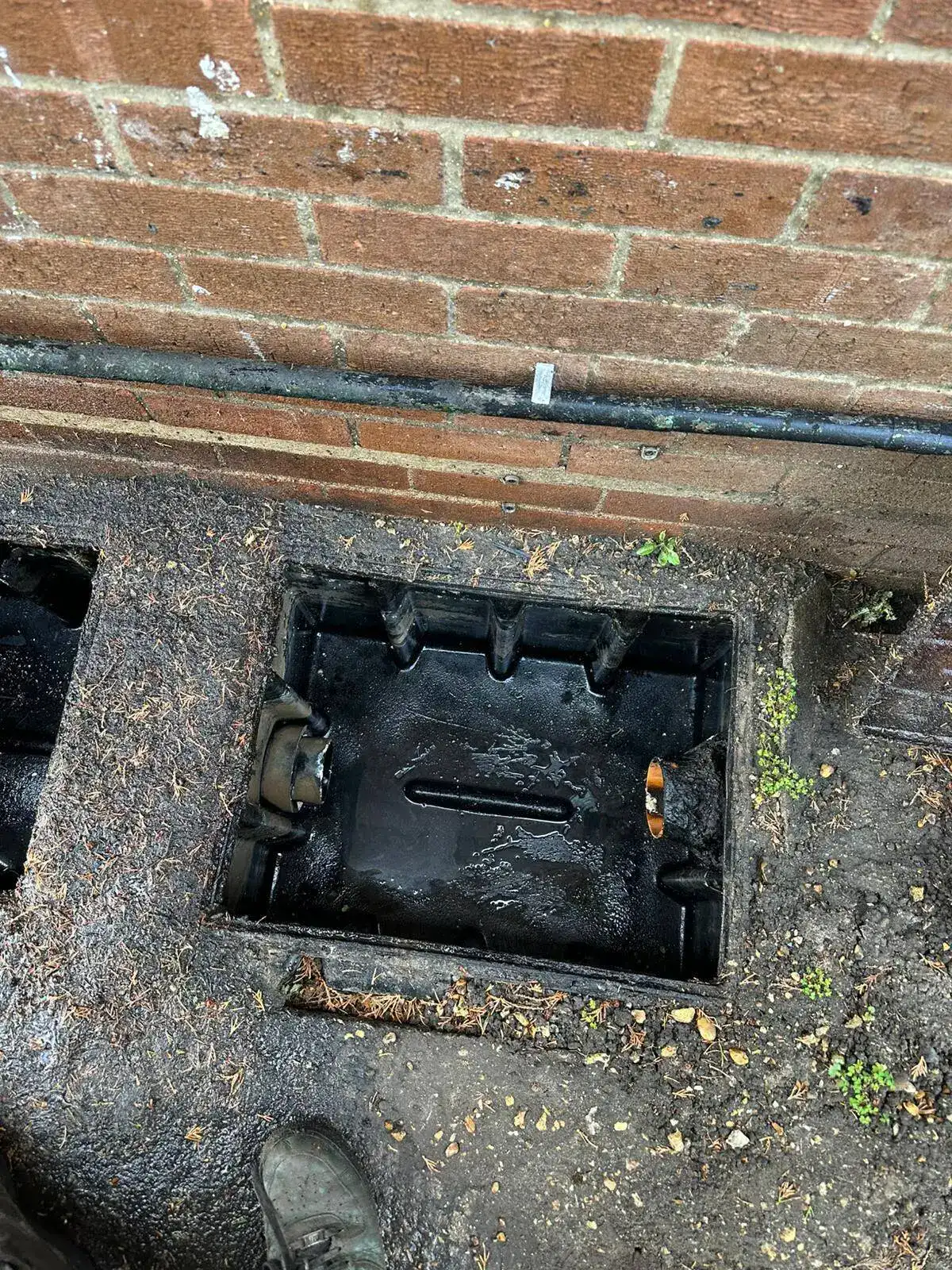
A grease trap does not stop working without warning. Before black liquid is overflowing back into your kitchen, the trap will show you something is wrong. You just need to know what to watch for.
It is the same story every time. A kitchen in King’s Lynn rings us with a blocked sink, and the trap has not been emptied in months. The water stops draining, the drains start to smell, and environmental health are not far behind.
Here are the signs your grease trap needs emptying and cleaning as soon as possible:
That last one happens far more often than you would expect. In a busy kitchen the attention is on the food, not on what is happening beneath the floor or out the back door. That is understandable. But a neglected trap fills with congealed fat, debris and silt, and once it is full the grease is no longer held back. It runs straight downstream into your waste pipes, and blockages follow. East Cambridgeshire District Council’s guidance on fats, oils and grease for food businesses sets out the same risk and the legal duty that comes with it.
Ignore these signs and the problems escalate. Grease builds up in the pipes carrying waste away, and the whole kitchen can grind to a halt on a Friday night with sewage coming up through the floor drains while the restaurant is full. In Gaywood we have taken a few panicked calls like that during dinner service. It is not a pretty picture.
Water UK has reported that fats, oils and grease are behind a large share of the sewer blockages across the country. The trap in your kitchen is there to stop that happening on your property and in the public sewers. Without a working trap, it is only a matter of time before the local council is knocking on your door.
If you recognise these signs, give us a call and we will sort it before service is affected.
Every kitchen is different. A fish and chip shop frying all day needs servicing more often than a care home reheating pre-packaged dishes. We get this question constantly from businesses in King’s Lynn.
Emptying intervals come down to three things: how much you cook, what you cook, and the size of the trap.
Most commercial kitchens fall into one of these groups:
These are general guides, not fixed rules. A busy place near the Tuesday Market Place serving 200 covers on a Saturday evening will need emptying more often than a small café doing 30. After the first empty, we set future intervals on what we actually find in the trap, not on guesswork.
As a rule of thumb in the trade, a grease trap should be emptied before the fats, oils and grease reach a quarter of its capacity. Leave it past that and the trap stops working. The grease passes straight into your drainage, the drains back up, and you are calling us for an emergency instead of a routine service. The kitchens we attend for blocked drains almost always have no schedule for regular emptying. They have let the trap fill until the drain blocked. Then they have to call us, and that means a smelly kitchen and a queue of customers waiting. We run maintenance contracts across West Norfolk. Pick the frequency that fits your kitchen, we arrive on the same day each cycle, empty and clean the trap, and confirm it is all done. The schedule is not fixed. If your menu changes or trade picks up over the summer, let us know and we will review it.
A working grease trap is not optional for a kitchen producing fats, oils and grease. You have a legal duty not to let those into the public sewer, and the trap is how you meet it. Environmental health inspectors check commercial kitchens in King’s Lynn, and the grease trap is one of the first things they look at. Under the Water Industry Act 1991, fats, oils and grease cannot be discharged into the public sewer. If your trap is full, cracked, or not emptied on a sensible schedule, you are not compliant. It is not worth the risk. Here is what it can mean for your business:
If your food hygiene rating is three or below, it puts customers off. One blocked drain and you are losing covers in the middle of a Friday night. The money is gone and so is the reputation. In King’s Lynn, word of a failed hygiene rating travels fast around the High Street and the Tuesday Market Place. Water UK has reported that fats, oils and grease are behind a large share of sewer blockages across the country, and older pipe networks like parts of West Norfolk do not help.
The fix is simple. A regular grease trap emptying schedule is the most effective way to stay compliant. We take the waste grease away and dispose of it at a licensed site. Every time we empty the trap, we leave you a record of when it was done and who did it. That is your evidence if environmental health turn up.
No call centres, no being passed around. When you ring, you speak to Alex. We plan the emptying schedule around your kitchen hours. Mornings before service or after you close both work well, depending on what suits you. You stay compliant without thinking about it, and you keep trading.
We get this question all the time around King’s Lynn. A grease trap overflows, there is a smell in the kitchen, environmental health get involved, and the tenant and landlord start blaming each other.
Most of the time it is the tenant’s responsibility, because they run the kitchen that creates the grease, so it falls to them to keep the trap emptied and maintained. That is the usual position, but it can change if the lease says otherwise.
Some leases make the landlord responsible for all drainage maintenance. Others split it between tenant and landlord. Some say nothing about grease traps at all, which leaves you with no guidance until there is a problem. If you run a restaurant, café or takeaway from leased premises in Gaywood or anywhere else, check your lease to see who is responsible for grease trap maintenance. Whatever it says about who pays, the person who can actually book the work needs to make sure it gets done. If the trap is blocked or overflowing, there is no point waiting for a legal argument between tenant and landlord to play out. It needs sorting. Environmental health officers do not care who is responsible for the trap. They care that it is maintained, compliant and emptied on schedule, and it is the food business operator who has to get any enforcement notice lifted.
We work with both tenants and landlords across West Norfolk on all of these. Sometimes the landlord sets up a grease trap maintenance service direct with us and adds the cost to the service charge the tenant pays. Sometimes the lease puts it all on the tenant, and the tenant signs up with us and pays us directly. Either way, we can help.
If you are not clear on what you need to do, give us a call. We cannot advise on your lease, but we can tell you what the grease trap service needs and when, which is usually the quickest way to sort the practical side.
No call centres, no being passed around. When you ring, you speak to Alex.
Common questions about Grease Trap Management in King’s Lynn
It depends on how busy your kitchen is. A fish and chip shop frying all day needs emptying far more often than a café serving light lunches. As a general guide, most food businesses in King’s Lynn need their grease trap serviced every four to twelve weeks. We look at your usage and set a schedule that keeps you compliant. Leaving it longer than needed is when blockages and environmental health notices start appearing.
All waste is taken to a licensed disposal site. It cannot go down your kitchen sink, into private drainage, or into public foul drains. Under Environment Agency rules, you are legally responsible for your waste even after it leaves your premises. We carry a waste transfer note for every job, which is the paperwork that proves your waste was disposed of correctly. Keep your copy on file in case environmental health ask to see it.
No, you do not need to close. A standard grease trap service in King’s Lynn takes around 30 to 45 minutes. Larger traps in hotels or care homes may take a little longer. We work around your kitchen schedule, so if early morning before service starts suits you better, that is when we come. Your team can carry on working while we get on with the job outside or beneath the floor.
Slow draining sinks, a greasy or putrid smell from your drains, and grey water backing up during a busy service are the clearest signs. If you cannot remember the last time the trap was emptied, that is also a warning. In areas like Gaywood, we regularly get calls during evening service from kitchens that have reached this point. Do not wait for sewage to appear on your kitchen floor before calling us.
Yes. Environmental health officers can inspect your premises and issue notices if your grease trap is not maintained properly. Discharging grease into public sewers is a legal offence, and the local council can act against your business. Water UK data shows fats, oils, and grease cause a large share of sewer blockages across the UK. Keeping a regular service record is the straightforward way to show you are meeting your legal duties.
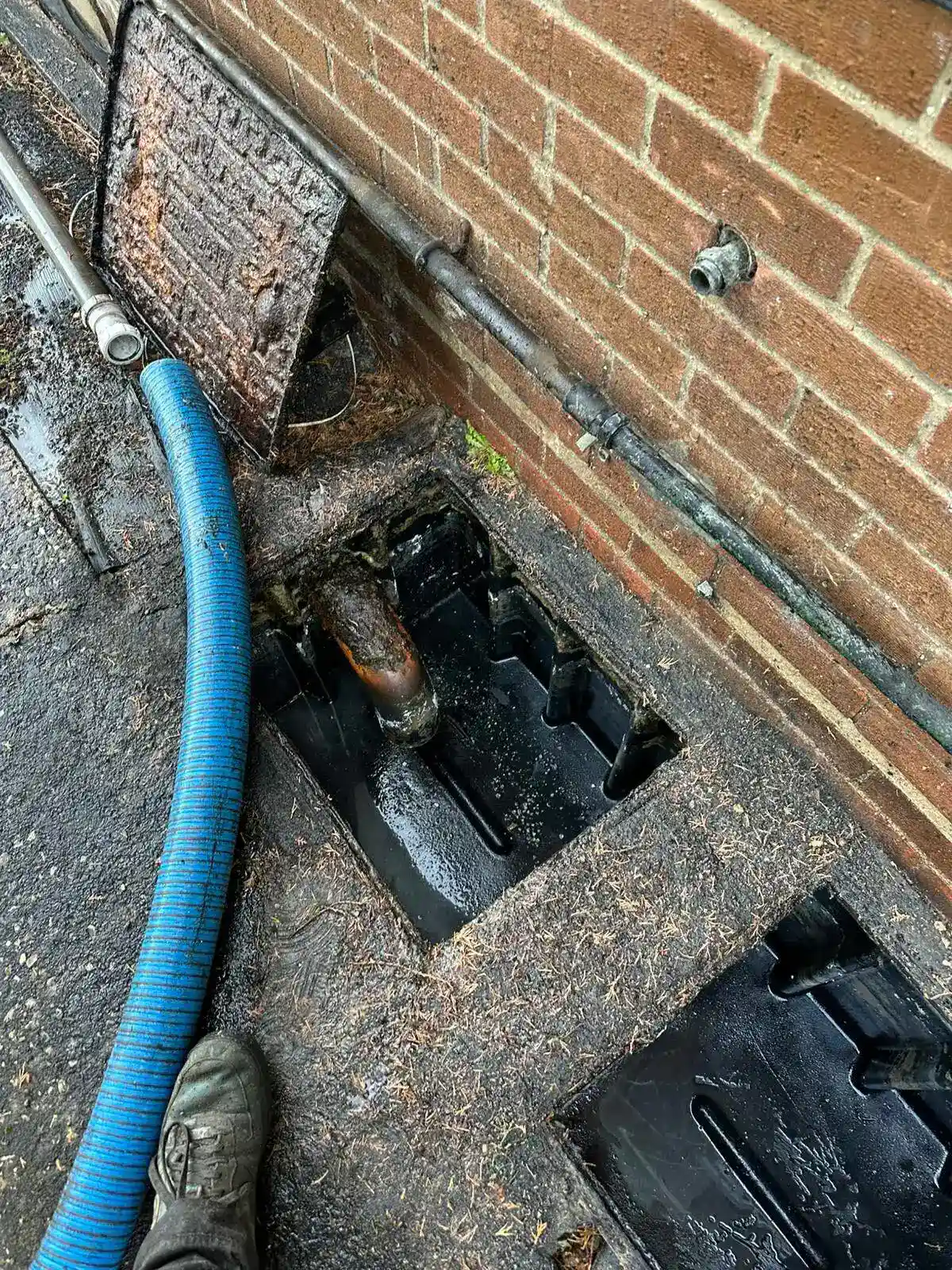
We locate the trap, lift the lid, and check the baffles, seals, and fittings before we start. All solidified fats, food waste, and black liquid are pumped out. We then clean the inside walls and baffles with high-pressure water jetting to remove hardened fat that reduces the tank’s capacity. Finally, we check that the inlet and outlet pipes are flowing freely. Everything removed leaves the site in our vehicle, with a waste transfer note issued before we go.
Call Alex direct and he will set up a schedule that suits your kitchen.